Blog Feed

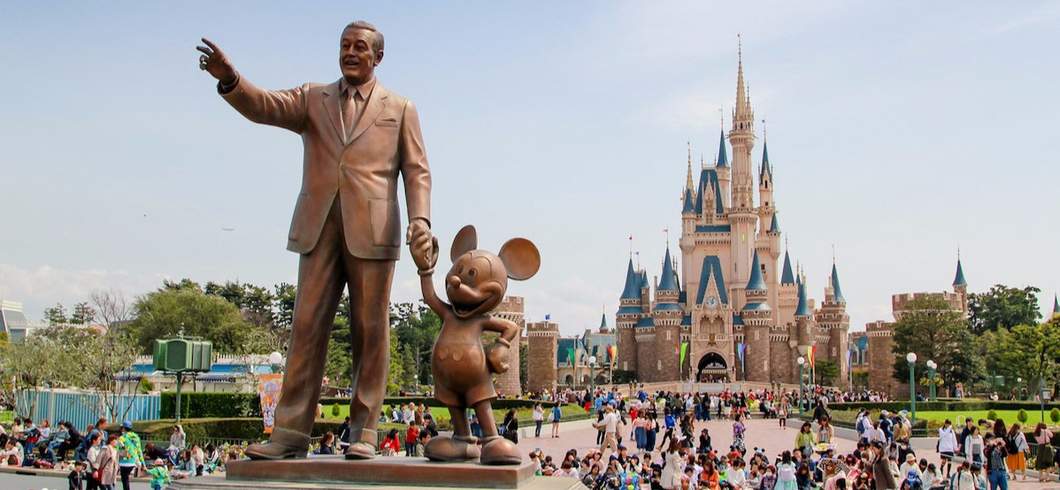
Disneyland Tokyo

Tokyo Disneyland (東京ディズニーランド Tōkyō Dizunīrando) is a 115-acre (47 ha) theme park at the Tokyo Disney Resort in UrayasuChiba Prefecture, Japan, near Tokyo.[1] Its main gate is directly adjacent to both Maihama Station and Tokyo Disneyland Station. It was the first Disney park to be built outside the United States, and it opened on 15 April 1983. The park was constructed by WED Enterprises in the same style as Magic Kingdom in Florida and Disneyland in California.[1] It is owned by The Oriental Land Company, which licenses the theme from The Walt Disney Company. Tokyo Disneyland and its companion park, Tokyo DisneySea, are the only Disney parks not wholly or partly owned by the Walt Disney Company (however, Disney has creative control).

The park has seven themed areas: the World Bazaar; the four traditional Disney lands: AdventurelandWesternlandFantasyland and Tomorrowland; and two mini-lands: Critter Country and Mickey’s Toontown. Many of these areas mirror those in the original Disneyland as they are based on American Disney films and fantasies. Fantasyland includes Peter Pan’s FlightSnow White’s Scary AdventuresDumbo the Flying Elephant, based on Disney films and characters.[2] The park is noted for its extensive open spaces, to accommodate the large crowds that visit the park.[1] In 2018, Tokyo Disneyland hosted 17.9 million visitors, making it the world’s third-most visited theme park behind the Magic Kingdom at Walt Disney World Resort and Disneyland Park at the Disneyland Resort.
Tokyo Tower

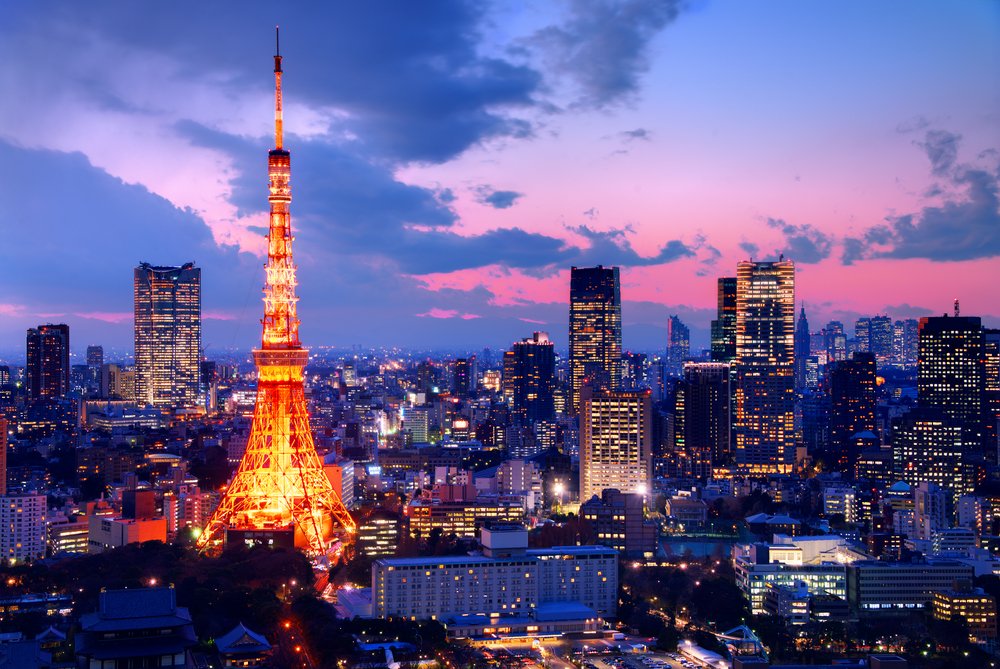
Tokyo Tower (東京タワー Tōkyō tawā, officially called 日本電波塔 Nippon denpatō “Japan Radio Tower”) is a communications and observation tower in the Shiba-koen district of Minato, Tokyo, Japan. At 332.9 metres (1,092 ft), it is the second-tallest structure in Japan. The structure is an Eiffel Tower-inspired lattice tower that is painted white and international orange to comply with air safetyregulations.

Built in 1958, the tower’s main sources of income are tourism and antenna leasing. Over 150 million people have visited the tower. FootTown, a four-story building directly under the tower, houses museums, restaurants and shops. Departing from there, guests can visit two observation decks. The two-story Main Deck (formerly known as the Main Observatory) is at 150 metres (490 ft), while the smaller Top Deck (formerly known as the Special Observatory) reaches a height of 249.6 metres (819 ft). The names were changed following renovation of the top deck in 2018.

The tower acts as a support structure for an antenna. Intended for television broadcasting, radio antennas were installed in 1961, but the tower now broadcasts signals for Japanese media outlets such as NHKTBS and Fuji TV. Japan’s planned digital television transition by July 2011 was problematic, however; Tokyo Tower’s height, 332.9 m (1,092 ft) was not high enough to support complete terrestrial digital broadcasting to the area. A taller digital broadcasting tower, known as Tokyo Skytree, was completed on 29 February 2012. Every five years Tokyo Tower is repainted. It takes one year to repaint it.

Since its completion in 1958, Tokyo Tower has become a prominent landmark in the city, and frequently appears in media set in Tokyo.

Mount Fuji

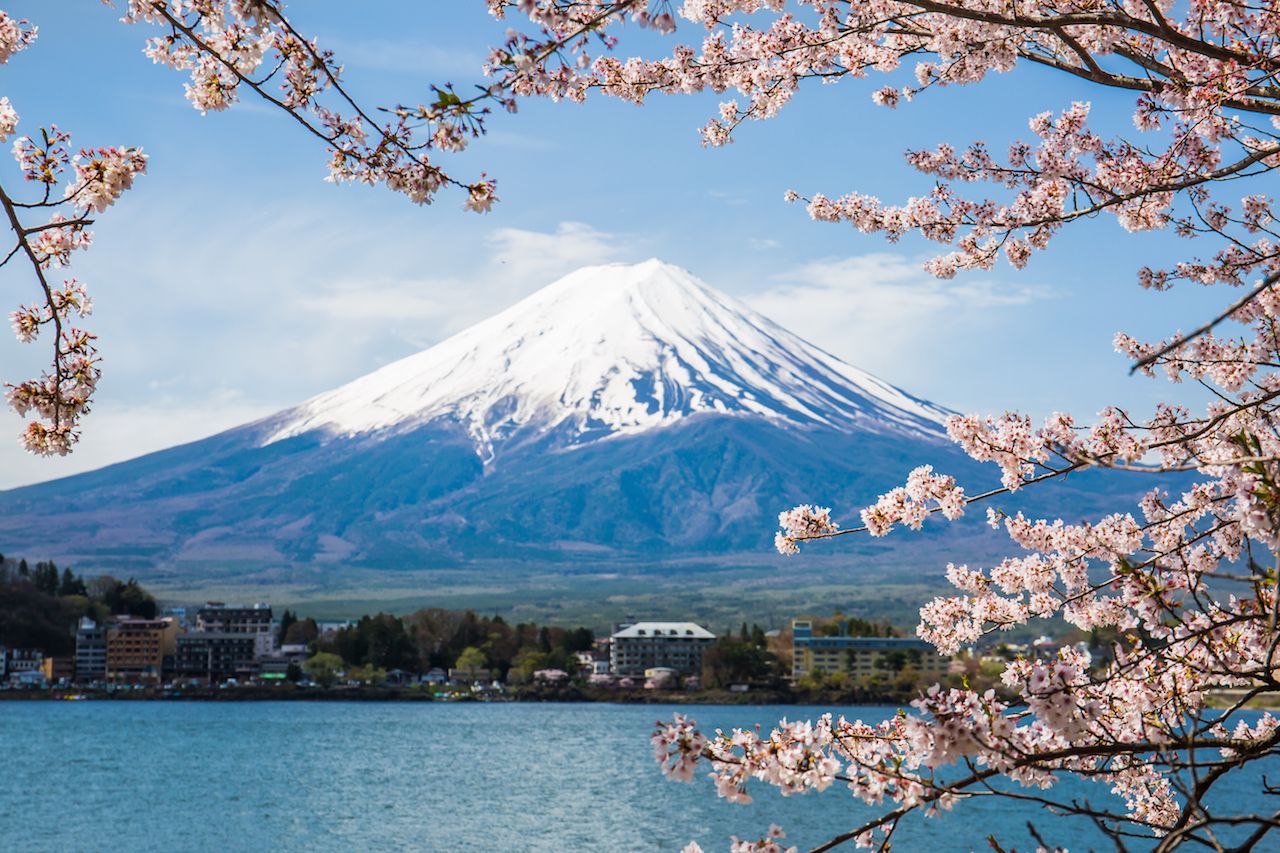
Mount Fuji (富士山, Fujisan) is with 3776 meters Japan’s highest mountain. It is not surprising that the nearly perfectly shaped volcano has been worshiped as a sacred mountain and experienced big popularity among artists and common people throughout the centuries.

Mount Fuji is an active volcano, which most recently erupted in 1707. It stands on the border between Yamanashi and Shizuoka prefectures and can be seen from Tokyo and Yokohama on clear days.

Another easy way to view Mount Fuji is from the train on a trip between Tokyo and Osaka. If you take the shinkansen from Tokyo in direction of NagoyaKyoto and Osaka, the best view of the mountain can be enjoyed from around Shin-Fuji Station on the right hand side of the train, about 40-45 minutes into the journey.

Note however, that clouds and poor visibility often block the view of Mount Fuji, and you have to consider yourself lucky if you get a clear view of the mountain. Visibility tends to be better during the colder seasons of the year than in summer, and in the early morning and late evening hours than during the middle of the day.

If you want to enjoy Mount Fuji at a more leisurely pace and from a nice natural surrounding, you should head to the Fuji Five Lake (Fujigoko) region at the northern foot of the mountain, or to Hakone, a nearby hot spring resort. Mount Fuji is officially open for climbing during July and August via several routes.